
Our Location
304 North Cardinal St.
Dorchester Center, MA 02124

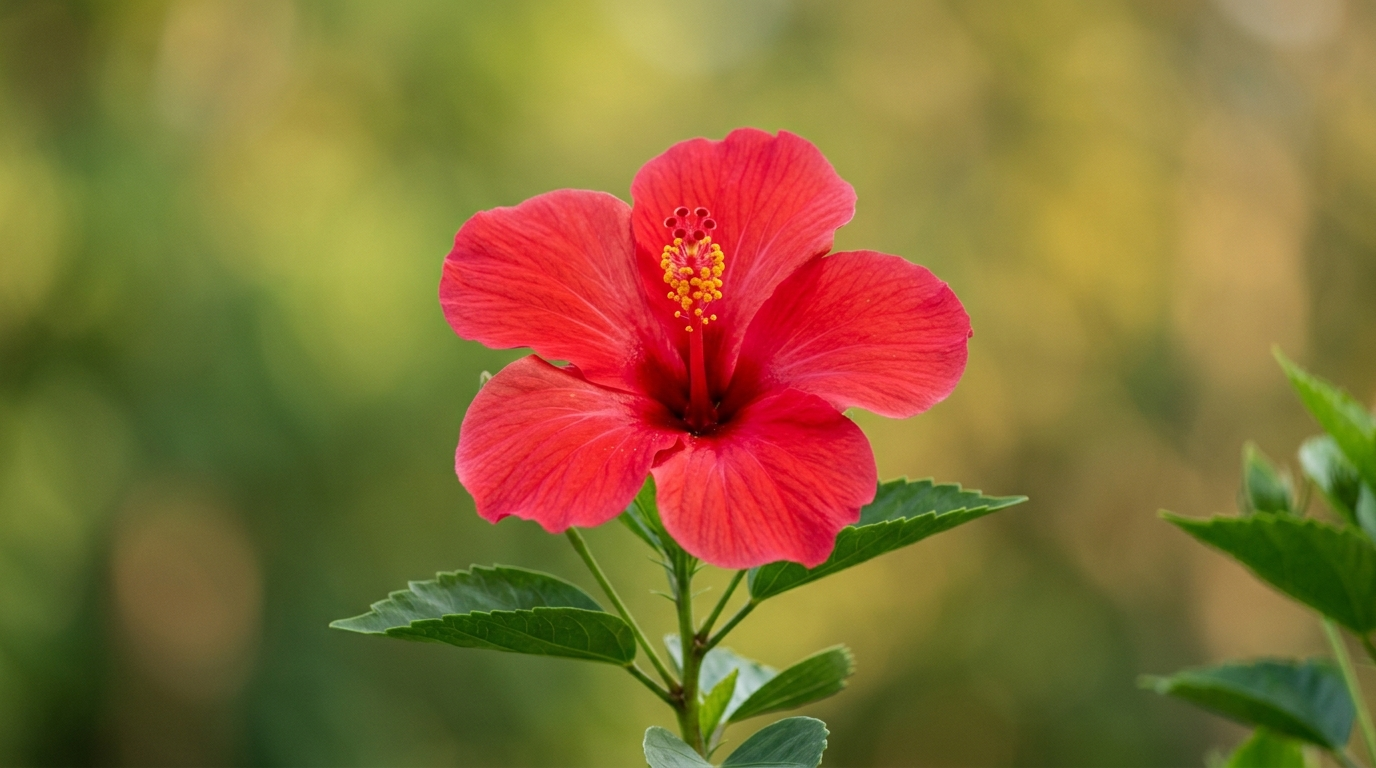
Some flowers have been waiting centuries for us to catch up.
Walk through the sun-drenched markets of Accra, Cairo, or Jaipur, and you will find hibiscus. Not as an ornament in a garden, but as a drink in someone’s hand. A celebration. A remedy. A daily ritual that connects them to thousands of years of human history.
In the West, we are only now rediscovering what cultures across Africa, the Middle East, and South Asia have always known: hibiscus is not just beautiful. It is powerful.
The story of hibiscus is the story of human migration, trade routes, and the quiet wisdom of traditional knowledge passed down through generations.
In Africa, hibiscus — locally called bissap or sorrel — has been cultivated for millennia. It appears in ancient Egyptian texts, was used in traditional medicine across West Africa, and remains a beloved ceremonial drink at celebrations and gatherings. There is a reason it was never forgotten: it works.
In the Middle East, the flower is steeped into karkadeh, a drink so culturally significant that it is offered to guests as a sign of respect and welcome. The deeper the crimson, the more valued the offering.
In South Asia, Ayurvedic practitioners have long prescribed hibiscus for its cooling properties and its ability to support cardiovascular health and circulation. In traditional Indian medicine, it is not incidental — it is intentional.
And across all these cultures, separated by continents and centuries, the conclusion is the same: this flower matters.
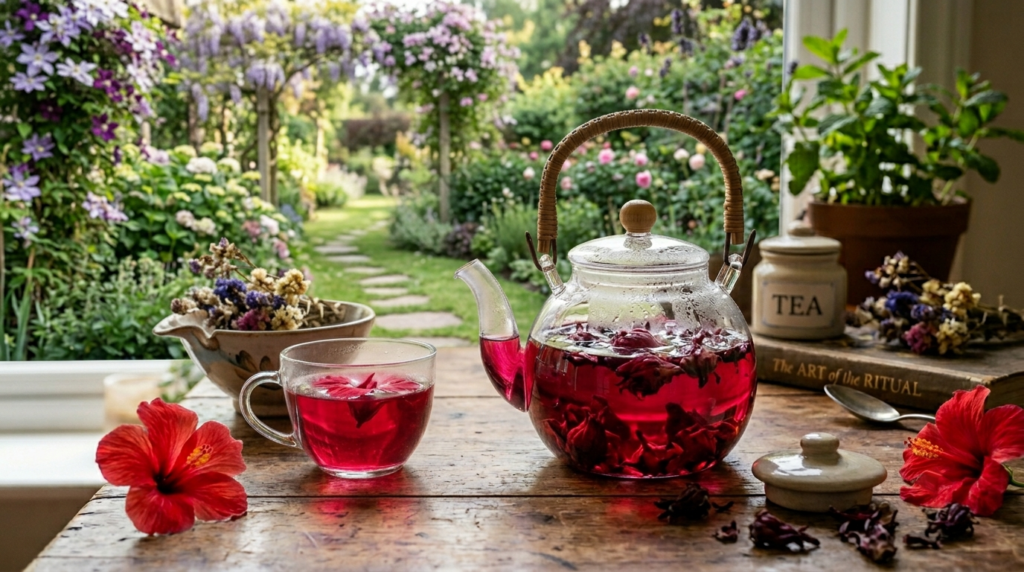
There is simply no flower quite like hibiscus. Its colour is not subtle. It is a deep, unapologetic crimson — the kind of red that seems to glow from within when steeped in hot water. It is the colour of vitality, of life force, of something that refuses to be ignored.
This visual intensity is not cosmetic. That colour tells you something vital is happening in your cup.
One cup of hibiscus infusion delivers:
This is not a drink that simply tastes good. It is a drink that does something.
Hibiscus is tart. Boldly, unapologetically tart. If you are expecting something floral and delicate, you will be wonderfully surprised — and perhaps initially challenged.
The flavour profile is complex:
This tartness is not a flaw — it is a feature. It is what makes hibiscus so versatile and so memorable. It cuts through sweetness. It pairs beautifully with spices. It stands entirely on its own.
Warm & traditional: Brew hot, add a touch of honey, and sip slowly. This is how it has been enjoyed for centuries across Africa and the Middle East.
Iced & refreshing: Brew double-strength, chill, and pour over ice with a squeeze of fresh lemon or lime. It becomes a thirst-quenching elixir, especially in warmer months.
In the evening: Despite its bold energy, hibiscus has traditionally been used to support relaxation and digestion. An evening cup can be wonderfully grounding.
With intention: However you brew it, bring presence to the moment. The tartness demands your attention — and that attention is part of the medicine.
To unlock the full potential of hibiscus, technique matters.
In an age of synthetic supplements and trending ingredients, there is something grounding about returning to something ancient. Hibiscus does not make headlines because it is new. It makes headlines because modern research finally has the tools to understand what traditional cultures have always known.
The Journal of Ethnopharmacology, the American Journal of Clinical Nutrition, and countless peer-reviewed studies have all begun to validate what Ayurvedic practitioners, African healers, and Middle Eastern herbalists have practised for generations.
Hibiscus is not a superfood because it is trendy. It is trendy because it is genuinely super.
Every time you brew Infusea’s hibiscus, you are connecting to something larger than yourself. You are joining millions of people across continents and centuries who have found in this flower a moment of pause, a boost of vitality, and a taste of wisdom earned slowly over time.
That is the power of hibiscus. Not because we say so. But because history says so.
Drink it. Feel it. Understand why it has never been forgotten.
