
Our Location
304 North Cardinal St.
Dorchester Center, MA 02124

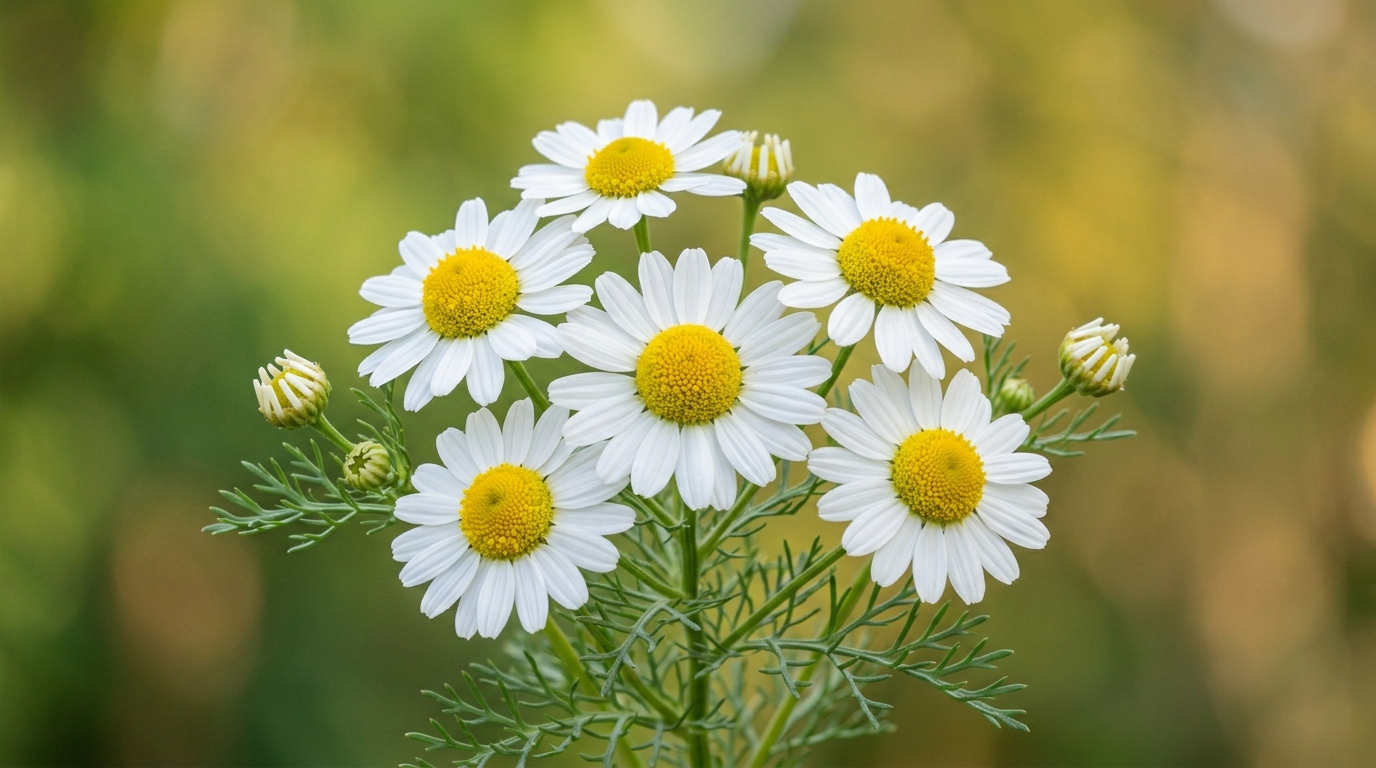
Some things endure because they simply work.
If there is one flower that has earned the unconditional trust of nearly every human culture, it is chamomile. From ancient Egypt to modern bedrooms, from medieval herbalism to contemporary science, chamomile has remained constant — a quiet anchor in a rapidly changing world.
There is a reason for this constancy. And it goes far deeper than habit or nostalgia.
Chamomile’s journey through human history is remarkable precisely because it is so consistent. Every culture that encountered it, adopted it. Every healer that studied it, valued it. Every generation that inherited it, passed it forward.
Ancient Egypt: The Egyptians were among the first to recognize chamomile’s power. They dedicated it to their sun god Ra, used it in embalming practices, and prescribed it for fever and inflammation. In a world of limited remedies, chamomile was medicine.
Ancient Rome: The Romans brought chamomile cultivation westward, incorporating it into their medical practices and their daily lives. Roman soldiers carried it, herbalists prescribed it, and the general population understood it as an essential plant.
Medieval Europe: When the Dark Ages threatened to erase much botanical knowledge, chamomile survived — preserved in monastery gardens by monks who understood its value for both body and spirit. It became one of the “noble four” plants in medieval herbalism, alongside rosemary, vervain, and wormwood.
Traditional Chinese Medicine: In TCM, chamomile (or similar flowers) have been used to support the movement of qi and to calm the spirit — a use that aligns perfectly with modern understanding of its calming properties.
Ayurveda: In Indian traditional medicine, chamomile has been valued for its capacity to balance Vata and Pitta doshas, supporting calm and digestion.
Modern era: Today, chamomile is the most widely consumed herbal tea in the world. In virtually every country, in virtually every culture, there is a version of “chamomile tea at bedtime.”
This is not coincidence. This is convergent wisdom. Across thousands of years and thousands of miles, humanity independently arrived at the same conclusion: chamomile works.
For decades, chamomile’s calming effects were attributed to folklore and placebo. But modern neuroscience and phytochemistry have revealed something remarkable: the traditional use of chamomile was backed by genuine biological mechanisms all along.
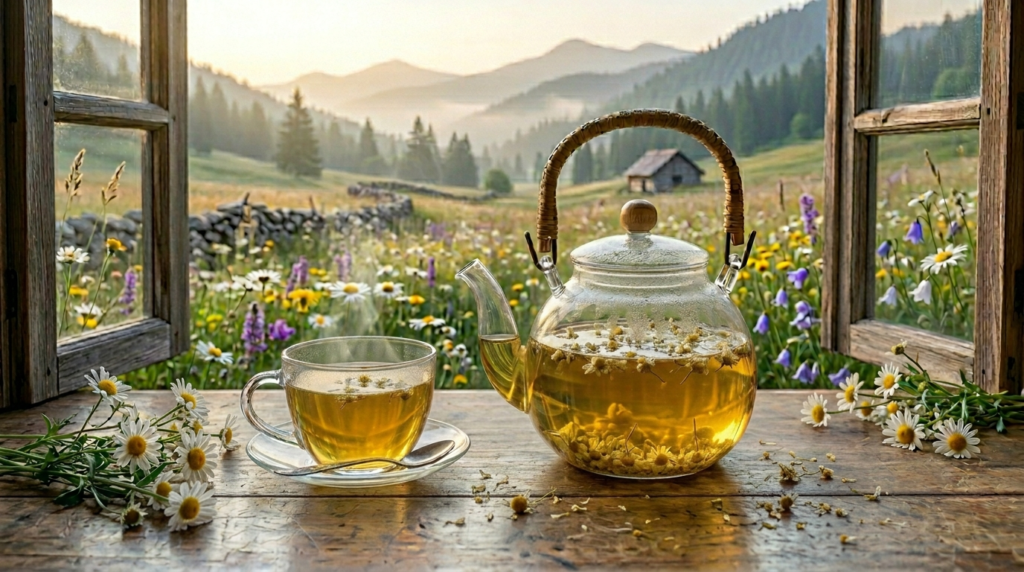
At the heart of chamomile’s calming power is a flavonoid compound called apigenin. Here is how it works:
In your brain, there are specific receptors — notably, benzodiazepine receptors — that are associated with relaxation, anxiety reduction, and sleep onset. Apigenin binds to these receptors, essentially signalling to your nervous system: it is safe to relax.
This is not a placebo effect. This is neurobiology. Your brain chemistry literally shifts when you consume chamomile.
Peer-reviewed studies have documented chamomile’s benefits for:
The remarkable thing is that none of this contradicts traditional use. Modern science is simply confirming what healers understood empirically for thousands of years.
Unlike hibiscus (which is boldly tart) or even butterfly pea (which has subtle earthiness), chamomile is almost apologetically gentle.
The flavour profile:
This gentleness is strategic. A harsh, aggressive flavour would signal to your nervous system that something challenging is happening. Chamomile’s softness sends the opposite message: you are safe. You can relax.
Chamomile’s gentle nature requires a gentle approach to brewing.
What is fascinating is how chamomile infusions have organically become ritualized across wildly different cultures — not because anyone coordinated it, but because the plant itself invites ritual.
The British tradition: A proper cup of chamomile tea, brewed in a pot, served in fine china, with perhaps a biscuit — chamomile as an act of self-care and civilisation.
The Mediterranean approach: Chamomile as an after-dinner digestif, supporting both digestion and conversation as the evening winds down.
The Middle Eastern practice: Chamomile as part of a broader tea ceremony, served with respect and presence.
The American wellness trend: Chamomile as sleep support, often combined with other calming herbs like lavender or passionflower.
In Indian tradition: the chamomile flower is known as Babuna ka Phool (or Babuna). While not an ancient native flower, it has been integrated into holistic Indian practices like Ayurveda and Unani medicine for its cooling, calming, and tridoshic balancing
All of these are valid. All of them honour the plant. And all of them centre the same understanding: this flower asks you to slow down.
While chamomile is famous as a bedtime tea, its benefits extend far beyond the evening hours.
Morning clarity: A gentle cup of chamomile in the morning can ease digestive upset and set a calm tone for the day.
Afternoon grounding: If anxiety or scattered energy hits mid-afternoon, chamomile can gently recenter you without the crash that comes with caffeine.
Post-meal digestion: Chamomile has traditionally been used after meals to support comfortable digestion — a practice worth reviving.
Stressful moments: Rather than waiting until bedtime, chamomile can be your companion during challenging moments — meetings, transitions, difficult conversations.
The point is this: chamomile is not a supplement you take before bed. It is a presence you invite throughout your day whenever calm, clarity, or comfort is needed.
In a world obsessed with the next trending superfood, the next revolutionary supplement, the next biohack, chamomile remains quietly constant. It does not shout. It does not promise miracles. It simply works — and has worked for thousands of years.
There is wisdom in that consistency.
Chamomile teaches us that the most powerful solutions are often the simplest. The oldest. The most humble. A flower dried and steeped in hot water. No processing. No additives. No marketing required.
Just trust. Built slowly, over millennia, one satisfied sip at a time.
In the rush of modern life, we have forgotten how to be gentle with ourselves. Chamomile is an invitation to remember.
It invites you to:
Brew a cup tonight. Hold it in both hands. Breathe in the gentle steam. And let thousands of years of human experience teach you what your nervous system already knows: it is safe to relax.
