
Our Location
304 North Cardinal St.
Dorchester Center, MA 02124

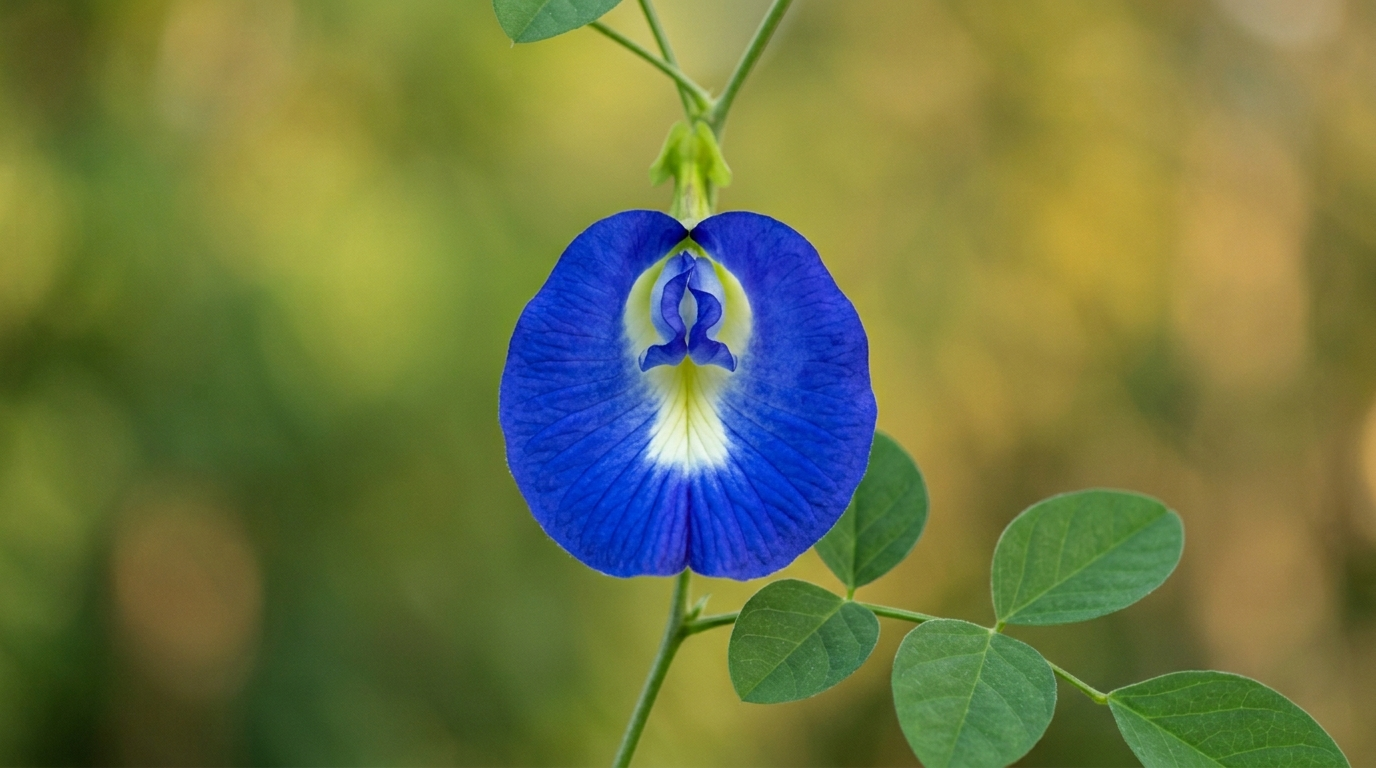
Magic is real. It just wears the face of chemistry.
Watch a cup of indigo tea shift to vivid violet the moment you add a squeeze of lemon. See the colour bloom and change like living watercolour in your hands. Taste something delicate and subtly earthy that somehow feels both ancient and impossibly modern.
Welcome to butterfly pea — nature’s most visually enchanting infusion, and a quiet revolution in how we think about botanicals.
Butterfly pea is native to Southeast Asia, where it has grown wild and been cultivated for centuries. In Thailand, Malaysia, Vietnam, and across the region, this extraordinary flower has been woven into culinary traditions, wellness practices, and cultural ceremonies for generations.
Traditional uses are surprisingly varied:
What is remarkable is that Western wellness culture is only now catching up with what Southeast Asian healers have understood for centuries.
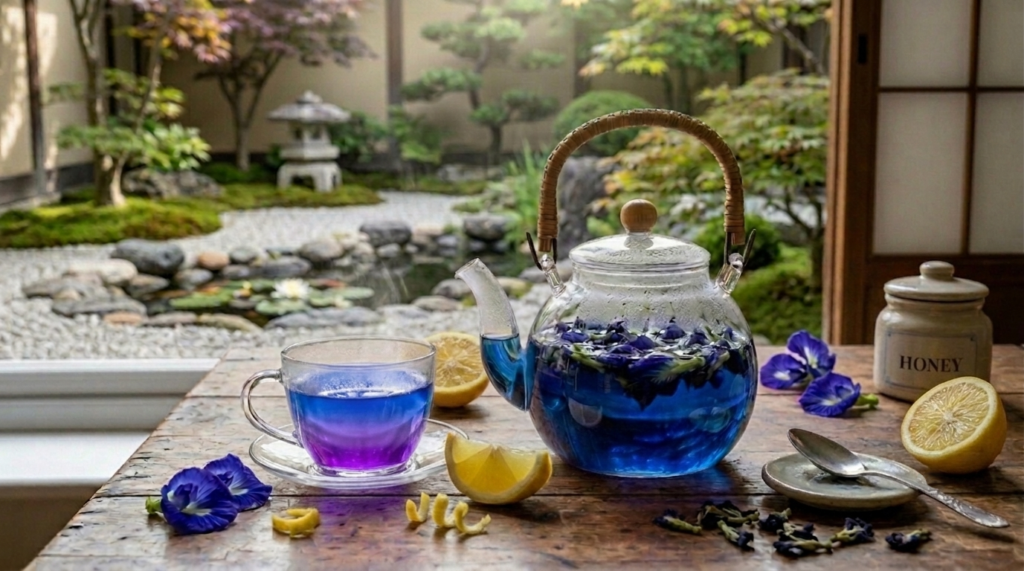
The first thing you notice about butterfly pea is its colour: a stunning, almost impossible indigo-blue. This colour comes from anthocyanin compounds called ternatins — the same class of pigments responsible for the vivid hues in blueberries and purple cabbage.
But here is where butterfly pea becomes truly special.
Butterfly pea is pH-sensitive. This means its colour responds to acidity:
This is not a trick. It is chemistry. And it is so visually stunning that your first sip becomes an event rather than a casual moment.
The traditional use of butterfly pea for memory and mental clarity is not folklore disconnected from science. Modern research is beginning to validate what Southeast Asian practitioners have long observed.
Studies have pointed to the anthocyanins and other polyphenolic compounds in butterfly pea as potentially beneficial for:
The science is still emerging, but what we know is encouraging: butterfly pea is not just beautiful. It is genuinely functional.
If hibiscus is bold and chamomile is gentle, butterfly pea occupies a unique middle ground.
The flavour profile:
The truth is, butterfly pea is not primarily about taste. It is about the experience — the visual drama, the colour transformation, the sense of participating in something that feels like minor magic.
This makes butterfly pea wonderfully versatile:
The colour transformation is the visual heart of butterfly pea, but it also requires a slightly gentler brewing approach than some other florals.
Part of the power of butterfly pea is that it elevates the act of drinking tea into something more intentional, more present, more seen.
When you brew butterfly pea:
This is not incidental. The aesthetic experience is part of the wellness benefit. Presence, attention, and mindfulness are foundational to wellbeing — and butterfly pea naturally invites all three.
In the last few years, butterfly pea has exploded in popularity among wellness enthusiasts, Instagram-famous cafés, and health-conscious consumers. And for good reason: it delivers on multiple levels.
Visually: It is Instagram-worthy without trying Functionally: It offers genuine antioxidant and neuroprotective benefits Traditionally: It carries centuries of use and wisdom Environmentally: It is a whole-flower infusion with zero packaging waste (when sourced responsibly)
It is one of the rare products that satisfies the head (the science), the heart (the beauty), and the conscience (the ethics) all at once.
Every cup of butterfly pea is an invitation to understand something bigger than yourself. It is a reminder that some of humanity’s most sophisticated wellness knowledge comes not from laboratories, but from centuries of careful observation by healers who understood the body and the plant world with remarkable depth.
When you brew butterfly pea, you are not just making a drink. You are participating in a tradition that stretches back generations across one of the world’s richest botanical regions.
Steep slowly. Watch the magic. Understand the science. Taste the wisdom.
